







Human Body Systems: The Skeletal System
What is the Skeletal System?
Your skeletal system is the body’s framework. It includes:
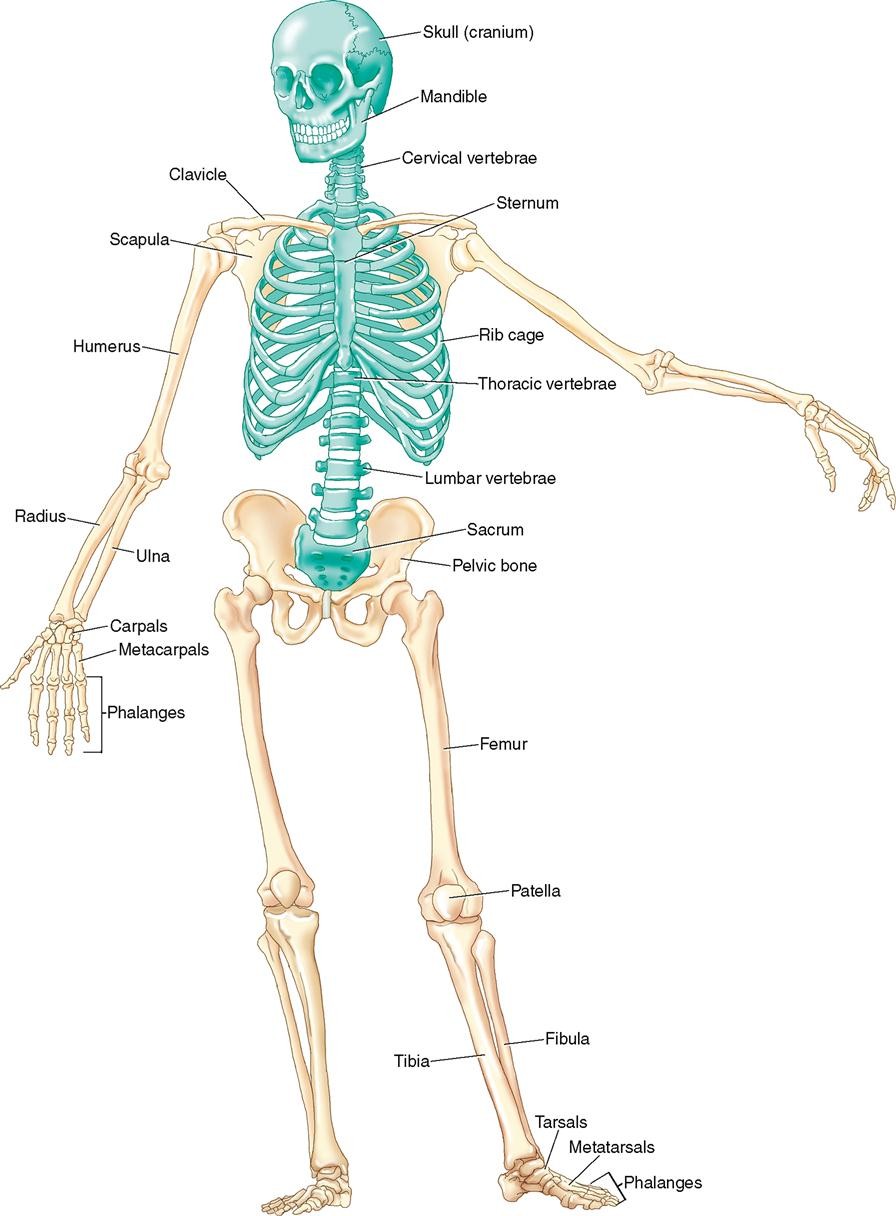
Bones (206 in adults) — hard organs that give shape and protect organs.
Cartilage — smooth, flexible tissue at the ends of bones and in places like the nose and ears.
Joints — places where bones meet and move.
Ligaments — tough bands that connect bone to bone and stabilize joints.
Tendons — strong cords that connect muscle to bone (work closely with the skeletal system for movement).
Bone marrow — soft tissue inside bones that makes blood cells and stores fat.
Periosteum — thin, living outer layer of bone with nerves and blood vessels.
What the Skeletal System Does (Main Functions)
Support & Shape: Holds the body up (like scaffolding).
Protection: Skull protects the brain; ribs protect heart and lungs; vertebrae protect the spinal cord.
Movement: Bones act as levers, joints as hinges, and muscles provide the pull.
Blood Cell Production: Red marrow makes red blood cells, white blood cells, and platelets.
Mineral & Fat Storage: Stores calcium and phosphorus (for bone strength and nerve/muscle work) and yellow marrow fat (energy reserve).
Homeostasis: Helps keep calcium levels in blood stable for nerve signals and heartbeat.
Inside a Bone (Structure)
Compact bone: Hard outer layer—strong and dense.
Spongy bone: Lighter, honeycomb-like interior—absorbs shock and holds red marrow.
Marrow:
Red marrow: makes blood cells.
Yellow marrow: stores fat.
Periosteum: Outer living layer that nourishes bone and anchors tendons/ligaments.
Bone cells:
Osteoblasts build bone,
Osteoclasts break down old bone,
Osteocytes maintain bone.
Together they constantly remodel bone so it stays strong and can repair tiny damage.
Joints: Where Movement Happens
Immovable (fibrous): little/no movement (skull sutures).
Slightly movable (cartilaginous): limited movement (between vertebrae).
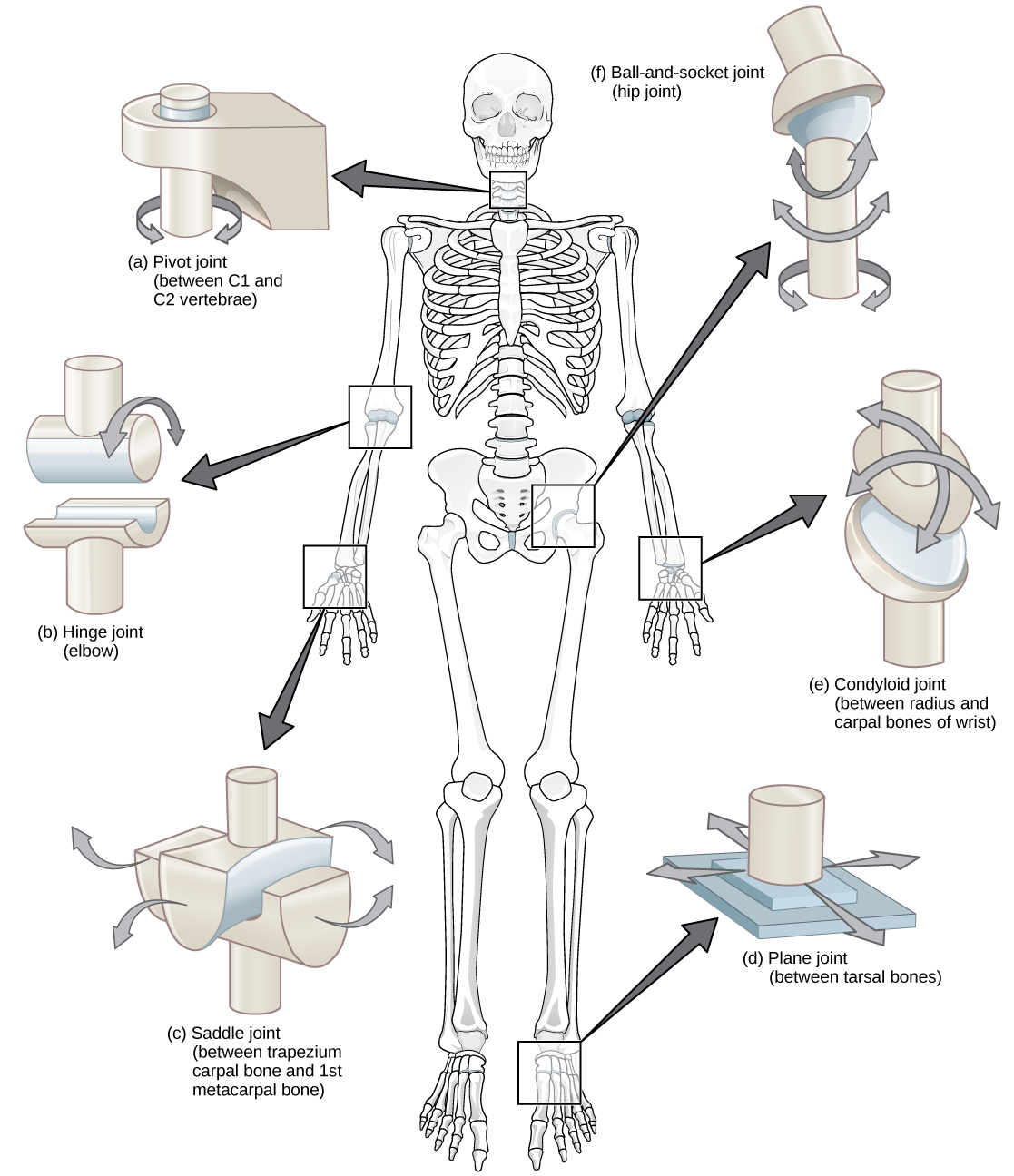
Freely movable (synovial): lots of movement; most body joints:
Hinge (elbow, knee) — bends/straightens
Ball-and-socket (shoulder, hip) — rotates in many directions
Pivot (top of neck) — rotation
Gliding (wrist, ankles) — sliding
Saddle/Condyloid (thumb, knuckles) — varied motion
Parts of a synovial joint:
articular cartilage (smooth cushion),
synovial fluid (lubricant),
joint capsule and ligaments (stability),
sometimes bursae (small fluid sacs to reduce friction).
How the Parts Work Together (System Teamwork)
Bones provide rigid levers.
Joints allow those levers to move.
Cartilage & synovial fluid reduce friction so motion is smooth and painless.
Ligaments keep bones aligned so joints don’t wobble or dislocate.
Tendons transmit muscle pull to bone—this is what actually moves you.
Marrow keeps blood supplied; those blood cells then carry oxygen (red cells) and fight infection (white cells), helping bones and all tissues stay healthy.
Nerves in the periosteum and joint capsules sense position and pain, protecting you from injury.
Blood vessels bring calcium, phosphorus, and oxygen to bone cells for building and repair.
Growth and Repair
Growth plates (near the ends of long bones) are zones where bone lengthens during childhood and adolescence; they close in late teens.
Remodeling continues for life: tiny stresses from walking and sports signal bones to get denser and stronger.
Fracture repair: blood clot → soft callus (cartilage) → hard callus (spongy bone) → remodeling to original shape.
Must-Know Info (Quick Facts)
Adults have ~206 bones; kids have more because some fuse as they grow.
Calcium and vitamin D are essential for strong bones.
Weight-bearing exercise (walking, jumping, sports) builds bone density.
Bones are living tissue with blood supply and nerves.
Peak bone mass is built in your childhood and teens—habits now affect bone strength for life.
Common Problems (Know the Difference)
Fracture: a broken bone (needs immobilization; sometimes surgery).
Sprain: stretched/torn ligament (joint stability issue).
Strain: stretched/torn muscle or tendon.
Dislocation: bone forced out of a joint.
Scoliosis: sideways curve of the spine (screening and, if needed, treatment).
Osteoporosis (later life): bones become less dense; strong youth habits help prevent it.
Healthy Habits for a Strong Skeletal
Eat for your bones
Calcium (milk, yogurt, sardines with bones, malunggay, tofu): raw material for hard bone matrix.
Vitamin D (safe sun exposure, fortified foods):
helps intestines absorb calcium.
Protein (fish, eggs, beans): builds the collagen “rebar” inside bone.
Magnesium & phosphorus (nuts, seeds, whole grains, fish): partners in mineralizing bone.
Move your body (weight-bearing & impact)
Activities like brisk walking, running, jump rope, basketball: signal bones to add density where forces are highest (Wolff’s Law).
Practice good posture & ergonomics
Neutral spine when sitting; screen at eye level; feet flat: reduces uneven stress on vertebrae and discs.
Backpack smart
Keep load ≤ 10–15% of body weight; use both straps: protects the spine and shoulders.
Protect your joints
Warm up, learn correct technique, wear proper shoes/gear: keeps cartilage from excessive wear and prevents sprains.
Sleep & recover
Growth hormone peaks during sleep; bone/tissue repair accelerates overnight.
Hydrate
Cartilage and discs need fluid to stay cushioned and slippery.
Limit bone-unfriendly habits
Avoid smoking/vaping and excessive sugary/carbonated drinks: these can harm bone-building and calcium balance.
Safe sun, smart screen time
Short daily sun exposure for vitamin D; avoid hours of slouching at screens to protect posture.
Respond to pain
Sharp joint/bone pain or swelling? Rest and tell an adult; early care prevents worse injury.
Skeletal System in the Bigger Picture
(System Connections)
Muscular system: Muscles pull on bones via tendons → movement. No bones = no levers; no muscles = no motion.
Nervous system: Nerves coordinate muscle contractions and joint position (proprioception) to keep balance.
Circulatory system: Delivers oxygen and nutrients to bone cells; red marrow makes blood cells that the heart then pumps around.
Endocrine system: Hormones (like parathyroid hormone, calcitonin, vitamin D) keep calcium levels steady for bones, nerves, and muscles.
Integumentary (skin): Makes vitamin D with sunlight—vital for calcium absorption.
Immune system: Many immune cells begin life in bone marrow.