








Human Body Systems: The Muscular System
What is the Muscular System?
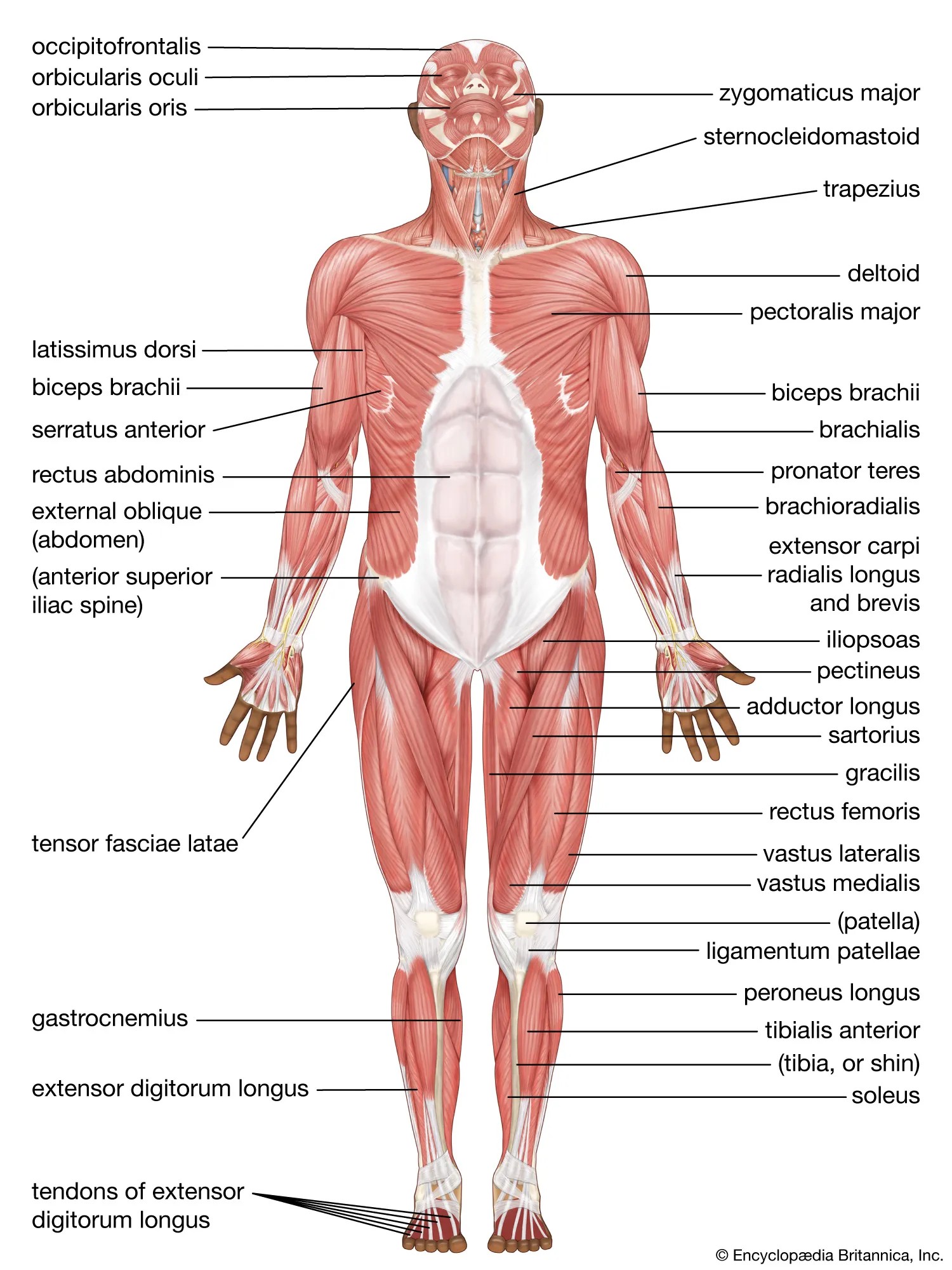
Your muscular system is the body’s engine for movement. It includes:
Muscles (600+ organs) — bundles of muscle fibers that shorten (contract) to produce force.
Tendons — strong cords that attach muscle to bone so force becomes movement.
Fascia — thin sheets that wrap and organize muscles.
Blood vessels & nerves — bring fuel/oxygen and deliver the “contract now” signal.
What the Muscular System Does (Main Functions)
Movement: Walk, blink, breathe, digest—muscles power it all.
Posture & Stability: Small “core” and back muscles hold you upright.
Heat Production: Contractions release heat; shivering warms you.
Circulation & Organ Function: The heart is a muscle; smooth muscles move food, control pupil size, and regulate blood flow.
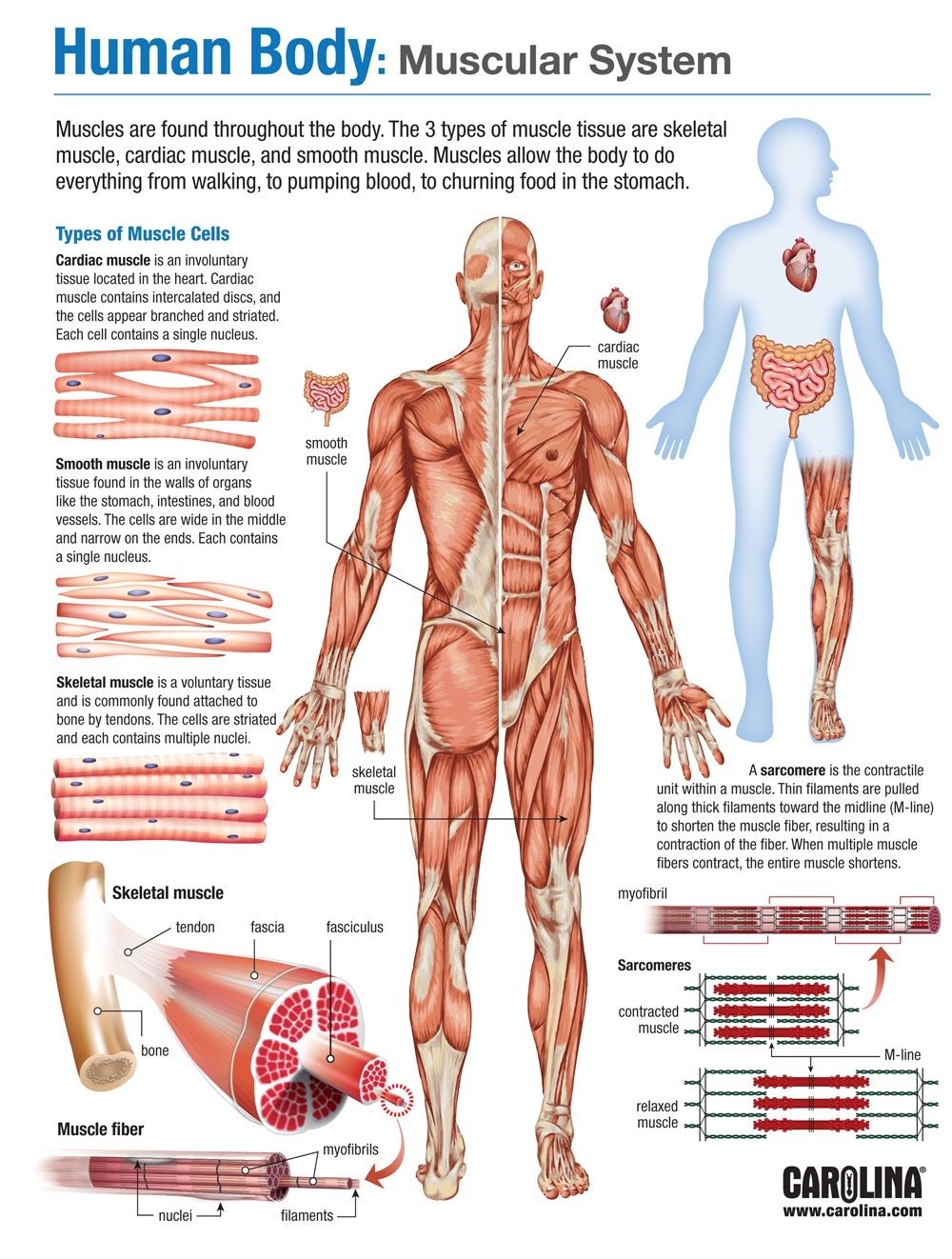
Three Types of Muscle Tissue
Skeletal muscle (voluntary, striated)
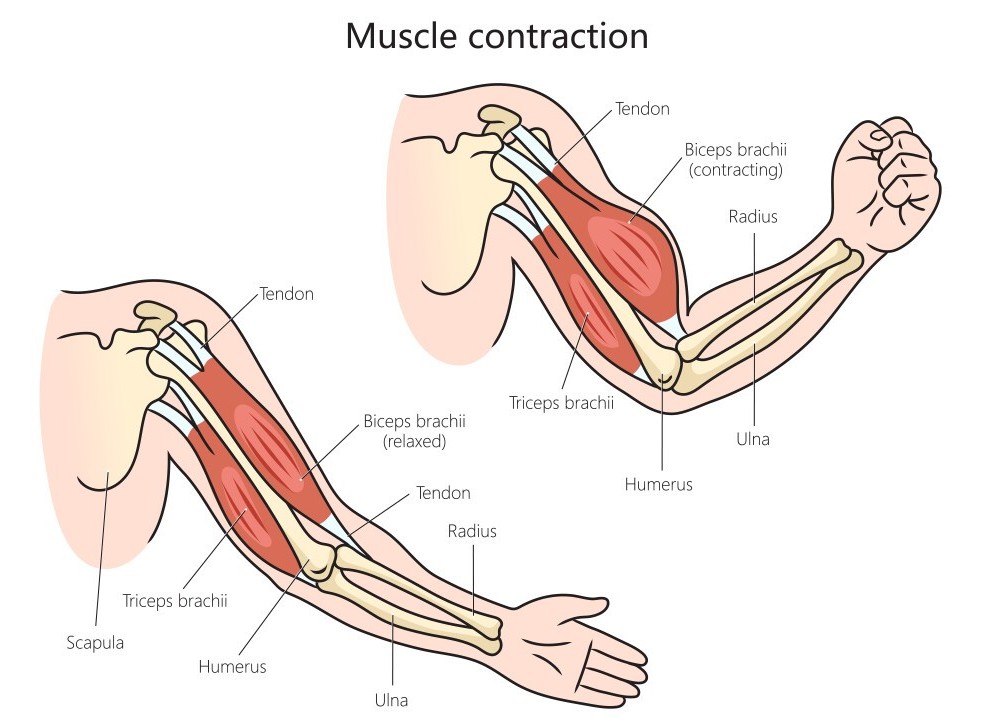
Attaches to bones; you control it (running, writing). Works in pairs: when one contracts (agonist), its partner relaxes (antagonist).
Smooth muscle (involuntary)
In organs and blood vessels; moves food in the intestines, narrows/widens airways and arteries.
Cardiac muscle (involuntary, never tires)
Makes up the heart wall; rhythmically contracts to pump blood.
Inside a Skeletal Muscle (How Contraction Happens)
A muscle is made of fascicles → muscle fibers (cells) → myofibrils → sarcomeres.
Each sarcomere has actin and myosin filaments. When a nerve signal arrives:
A single fiber contracts in an all-or-none manner, but you control total force by how many motor units (groups of fibers + one neuron) you recruit.
How Muscles Work With the Skeleton (Teamwork)
Muscle contracts → tendon pulls bone across a joint (bones are levers).
Antagonistic pairs (e.g., biceps/triceps) coordinate so movement is smooth.
Stabilizers (core/hip/back muscles) hold joints steady so prime movers can work safely.
Nerves time the contractions; blood delivers oxygen and nutrients; lungs and heart keep fuel lines open; hormones help regulate growth and repair.
Where Energy Comes From (Fuel Systems)
Immediate ATP: tiny store for about 1–2 seconds.
Short bursts (10–60 s): break down glucose without oxygen (anaerobic); can make lactic acid—that “burn.”
Longer efforts (minutes+): use oxygen to make ATP in mitochondria (aerobic), burning glucose and fats.
After hard exercise, you breathe fast to pay back oxygen and clear by-products.
Muscle Fiber Types
Slow-twitch (Type I): great for endurance; resist fatigue; many mitochondria.
Fast-twitch (Type II): great for power/sprints; stronger but tire faster. Most people have a mix; training emphasizes what you practice.
Growth, Repair, and Soreness
Exercise causes micro-tears in fibers → the body repairs them thicker/stronger (with protein and rest).
DOMS (delayed soreness) 24–48 hours later = normal adaptation. Sharp pain or swelling at once = possible strain—tell an adult.
Must-Know Info (Quick Facts)
Muscles pull; they don’t push. Movement needs pairs.
600+ muscles; the gluteus maximus is among the strongest.
Cardiac muscle beats nonstop and is specialized to resist fatigue.
Protein builds muscle; carbs refuel; water and electrolytes keep it working.
Good form and gradual training prevent injury better than any gadget.
Common Problems (Know the Difference)
Strain: overstretched/torn muscle or tendon (pain, weakness).
Sprain: overstretched/torn ligament at a joint (that’s skeletal system).
Cramp: sudden involuntary contraction (often low fluids/electrolytes or fatigue).
Tendinitis: irritated tendon from overuse or poor technique.
First aid for mild strains: RICE — Rest, Ice (short periods), Compression, Elevation; then gentle return to activity as advised.
Healthy Habits for Strong, Functional Muscles meals
Balanced meals
Protein (fish, eggs, beans, tofu): supplies amino acids to repair fibers.
Carbohydrates (rice, bread, fruits): refill muscle glycogen for energy.
Healthy fats (nuts, avocado): support hormones and long-term energy.
Micronutrients (iron for oxygen transport; calcium & magnesium for contraction/relaxation).
Hydration
Water carries nutrients, removes waste, and supports electrolyte balance to prevent cramps.
Warm-up first
5–10 minutes of light movement + dynamic stretching increases blood flow and makes fibers more flexible → fewer strains.
Learn proper technique
Correct form spreads load across muscles and protects joints/tendons.
Progress gradually
Increase time/weight/reps little by little (progressive overload) so tissues adapt safely.
Cool-down & flexibility
Easy movement + gentle static stretches after exercise help circulation and mobility.
Rest & sleep
Most muscle repair and growth happen during sleep; aim for consistent, adequate hours.
Posture & core strength
Neutral spine, engaged core, and ergonomic sitting reduce muscle fatigue and back/neck pain.
Cross-train
Mix endurance, strength, and mobility to build balanced muscles and avoid overuse.
Heat safety
In hot weather: shade, fluids, breaks—prevents heat cramps and exhaustion.
Avoid harmful substances
Skip smoking/vaping and unapproved supplements; they can impair oxygen delivery and growth.
Muscles in Daily Life (Examples)
Breathing: diaphragm (skeletal but automatic) contracts → lungs expand; intercostals lift ribs.
Eating & digestion: jaw muscles chew; smooth muscle pushes food along the intestines.
Circulation: cardiac muscle pumps; leg muscles squeeze veins to help blood return.
Writing/typing: finger flexors/extensors perform precise, rapid contractions while shoulder/back stabilizers hold posture.