Grade 6 Science: The Integumentary System
Overview
This lesson provides a comprehensive and interactive guide for Grade 6 learners to understand the integumentary system. It is designed to foster a deeper understanding of the system's parts, functions, and the importance of proper care. The activities encourage critical thinking, hands-on learning, and the application of concepts to real-life situations.
Lesson 1: Introducing the Integumentary System
Learning Objectives:
What is the Integumentary System?
The integumentary system is our body's outer covering. Think of it as your body's first line of defense, protecting you from the outside world. It is made up of your skin, hair, nails, and glands.
The Largest Organ: The Skin
Your skin is the largest organ in your body, covering an average area of about 2 square meters.
It protects your internal organs from harmful bacteria, UV rays from the sun, and physical damage.
It also helps regulate your body temperature and enables you to feel sensations like touch, pressure, and temperature.
Other Parts of the System:
Hair: Hair keeps you warm by trapping heat close to your body. Eyebrows and eyelashes protect your eyes from dust and dirt.
Nails: Nails are made of hardened protein (keratin) and protect the sensitive tips of your fingers and toes. They also help you scratch and pick things up.
Glands: Your skin has different types of glands that release substances like sweat and oil to keep it moisturized and to help regulate your body temperature.
Lesson 2: The Layers of the Skin
Learning Objectives:
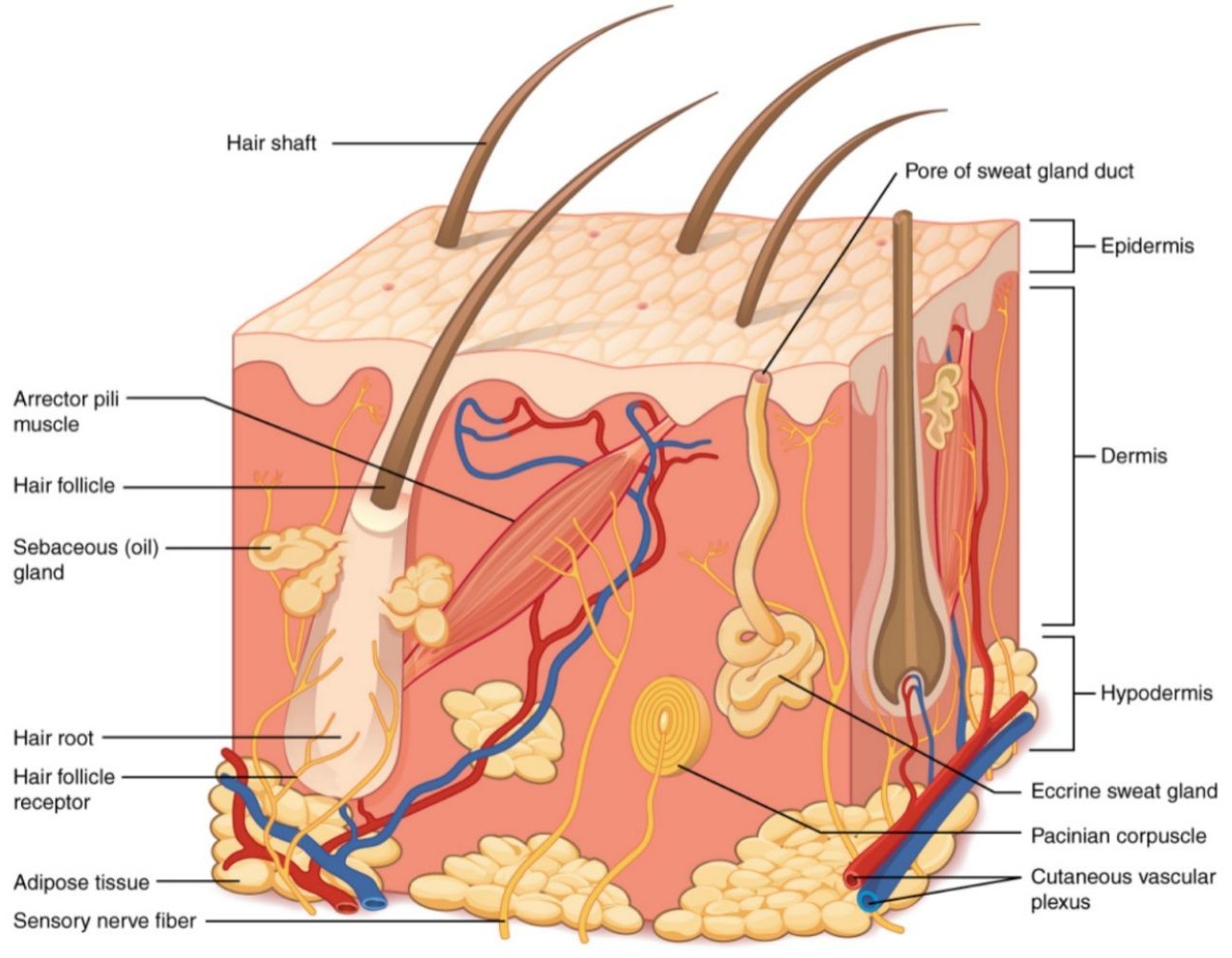
The Three Layers of the Skin:
Epidermis:
The outermost and thinnest layer of
the skin. It creates a waterproof
barrier for your body. It contains
cells that produce melanin, the
pigment that gives skin its color.
Dermis:
The thicker middle layer of the skin.
It contains blood vessels, hair
follicles, nerves, and sweat and oil
glands.
The nerves in this layer help you
feel sensations like touch, heat,
and pressure.
Hypodermis (Subcutaneous Layer):
The deepest and thickest layer of the
skin. It is made mostly of fat, which
helps insulate your body and act as
a shock absorber.
Lesson 3: Keeping the Integumentary System Healthy
Learning Objectives:
Common Problems Affecting the Integumentary System:
Acne: Blocked pores lead to oil and bacteria buildup.
Sunburn: Too much exposure to the sun's UV rays can damage your skin.
Cuts and Bruises: Injuries can damage the skin, but the integumentary system helps it heal.
Fungal Infections: Fungi can grow on the nails and skin if not kept clean, like Athlete's foot.
Proper Hygiene and Care:
Wash regularly: Use mild cleansers and bathe in warm water to keep your skin clean.
Protect from the sun: Wear a hat, use sunscreen, and seek shade to protect your skin from harmful UV rays.
Keep nails clean: Trim your nails regularly and keep them clean to prevent dirt and bacteria from getting underneath.
Eat healthy food: A balanced diet helps keep your skin and hair healthy.
Assessment
Part I: Multiple Choice
Choose the correct answer from the choices.
1. Which of the following is NOT a part of the integumentary system?
a. Heart
b. Skin
c. Hair
d. Nails
2. What is the largest organ of the body?
a. Brain
b. Skin
c. Lungs
d. Heart
3. Which layer of the skin contains sweat and oil glands?
a. Epidermis
b. Hypodermis
c. Dermis
d. All of the above
4. Which of the following is the main function of the integumentary system?
a. Digestion
b. Protection
c. Breathing
d. Walking
5. What can you do to keep your skin healthy?
a. Stay under the sun all day.
b. Wash regularly with a mild cleanser.
c. Never trim your nails.
d. Eat only sugary foods.
Part II: Short Answer
Answer the following questions in a few sentences.