Grade 5 Music and Arts
Quarter 2 – Exploring the Mediums, Patterns, and Practices of Early Philippine Music and Arts
Lesson 1: Mediums of Early Philippine Music and Arts
What are Mediums?
In arts and music, a medium is the material, tool, or resource used by artists and musicians to express their ideas, emotions, and culture. Just like paper and pencil are used for writing, early Filipinos also used specific materials from nature to create their songs, dances, and artworks.
Mediums help us understand how people lived in the past because they show us what resources were available in their environment and how they valued their culture.
Mediums of Early Philippine Music
Early Filipinos did not have modern instruments like pianos or guitars. Instead, they used materials from their surroundings such as:
I. Wood and Bamboo – Bamboo tubes and logs were shaped into instruments. Examples are the kubing (jaw harp), tongali (nose flute), and angklung (bamboo rattles).
Early Filipino music and art utilized bamboo and wood to create a variety of instruments, including flutes, zithers, drums, and buzzers, as well as for decorative and utilitarian objects like baskets and carvings.
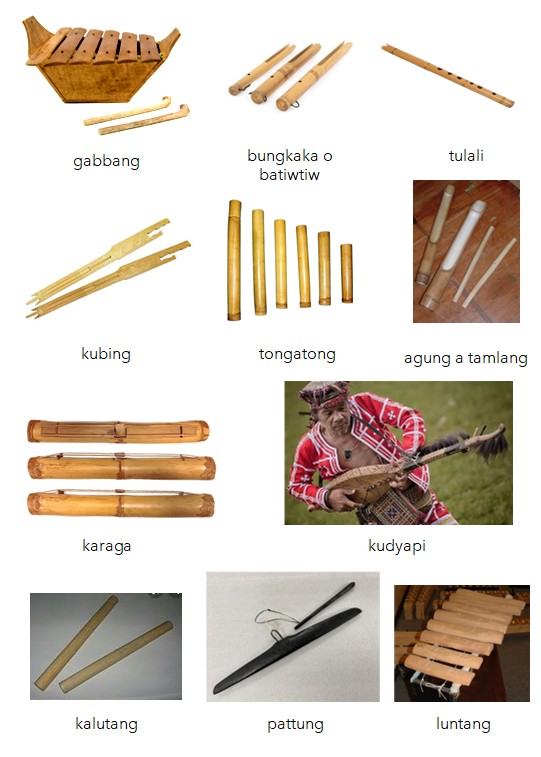
Notable instruments include the gabbang (bamboo xylophone), the kudyapi (wooden lute), and various bamboo stamping tubes like the Tongatong and Agung a tamlang. Wood was also used for clappers, log drums, and in the construction of artistic pieces such as ceremonial staffs and burial jars.
A. Instruments Made of Bamboo:
1. Gabbang: A bamboo xylophone with bright, wooden tones, used in folk dances and storytelling.
2. Bungkaka / Batiwtiw: A bamboo tube or clapper used for diversion or to ward off evil spirits.
3. Tulali: A bamboo flute played by the Panay Bukidnons.
4. Kubing: A bamboo jaw harp or "lip-valley jaw harp".
5. Tongatong: Stamping tubes of the Kalinga people.
6. Agung a tamlang: A bamboo slit drum.
7. Karaga: A bamboo guitar mentioned in the context of Mindanao music.
B. Instruments Made of Wood:
1. Kudyapi / Kutiyapi: Wooden string instruments, often with intricate carvings and floral motifs.
2. Kalutang: A pair of wooden sticks struck together for music.
3. Pattung: A wooden percussion yoke bar used in ceremonies by the Ifugao.
4. Luntang: A set of wooden beams, similar to a wooden xylophone, used by the Maguindanaon.
C. Arts and Crafts:
Carvings:
Wood was carved into decorative pieces, such as the crocodile head on the kudlung lute.
D. Ceremonial Objects:
Wooden idiophones like the pattung were used in various rituals.
E. Artistic Designs:
Hardwoods like narra and kamagong were used by Filipino luthiers for string instruments, reflecting skilled woodworking.
F. Pottery:
While not wood or bamboo, traditional pottery was also a medium for early Philippine art, with burial jars featuring anthropomorphic designs.
II. Metal – Gongs such as kulintang and agong were made from bronze or brass. These were used in celebrations and community gatherings.
III. Animal Skins – Used as drumheads, stretched tightly over wooden frames to make instruments like the dabakan.
IV. Voice (Human Voice) – The simplest and most natural medium. Early Filipinos sang chants (ullalim, bayok, hudhud) to tell stories, pray, or pass down history.
Music mediums were often organic and natural, reflecting the harmony of early Filipinos with nature.
Mediums of Early Philippine Arts
Aside from music, early Filipinos also expressed creativity through visual and performing arts. Their mediums were materials found in their environment:
Stone and Clay – Used for tools, jars (like the famous Manunggul Jar), and ornaments.
Plant Fibers and Leaves – Woven into mats (banig), baskets, and clothing.
Wood – Carved into statues (bulul of the Ifugao), house posts, and boats.
Metals and Shells – Made into jewelry, weapons, and decorative objects.
Natural Dyes and Pigments – From plants and soil, used to paint or tattoo skin (okir and batok designs).
Why Mediums are Important
Lesson 2: Patterns of Early Philippine Music and Arts
What are Patterns?
A pattern is something that repeats in order. In music, patterns can be sounds, rhythms, or melodies that are repeated. In arts, patterns can be shapes, lines, or colors arranged in a regular way.
For early Filipinos, patterns were not only decorations or designs. They were symbols of culture, beliefs, and daily life. Patterns helped people recognize their tribe, their traditions, and even their values.
Patterns in Early Philippine Music
Early Philippine music was simple but full of repeating sounds and rhythms. These patterns made it easier for people to remember and perform songs and chants.
1. Repetition of Sounds – Early songs often repeated lines or syllables to make them easier to memorize. Example: work songs or harvest chants.
2. Rhythmic Patterns – Gongs (kulintang, agong) and drums (dabakan) created steady beats that guided dancers.
3. Call and Response – A leader sings or plays a phrase, and the community responds. Example: tribal chants during rituals.
4. Melodic Patterns – The melodies used a few repeating notes, making them simple but meaningful.
Why important?
These patterns made music enjoyable, memorable, and easy to pass down to the next generation.
Patterns in Early Philippine Arts
Visual arts in the early Philippines were also filled with patterns, often inspired by nature and daily life.
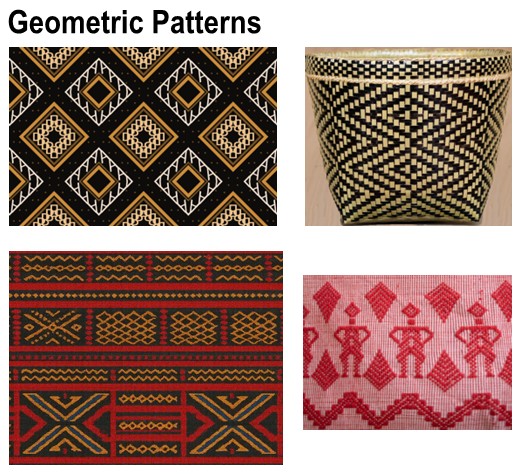
1. Geometric Patterns – Repeated lines, triangles, diamonds, and zigzags found in weaving (banig, t’nalak cloth).
2. Nature-Inspired Patterns – Designs showing plants, animals, or waves carved into wood, jewelry, or houses.
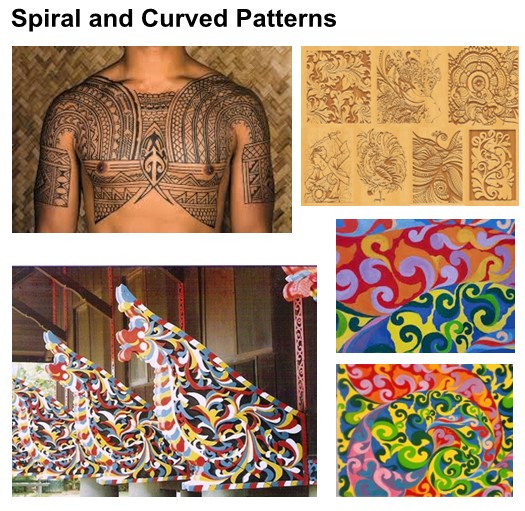
3. Spiral and Curved Patterns – Seen in tattoos (batok) and in okir designs of the Maranao.
4. Symmetry – Many artworks were balanced and even, showing harmony and order.
Why important?
Patterns gave meaning and identity. For example:
Remember
Patterns are everywhere—in sounds, songs, designs, and artworks. Early Filipinos used patterns not only for beauty but also to tell stories, express beliefs, and build community identity.